


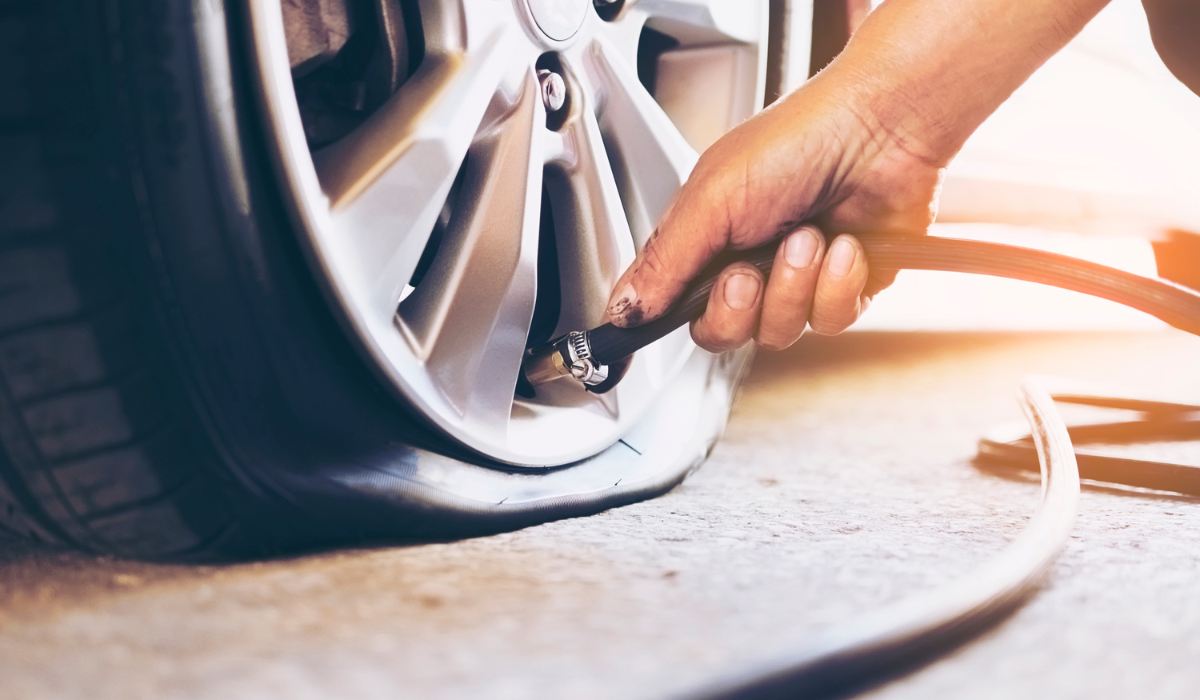
A flat tire can happen to anyone, even the most careful driver. The good news is that with the right steps, you can handle it safely and get your Toyota back on the road in no time. Whether it’s a slow leak, a puncture from a nail, or a sudden blowout, knowing how to respond helps you protect your vehicle and avoid costly repairs.
This guide from Toyota Vallejo walks you through exactly what to do when your Toyota gets a flat tire, how to stay safe, and how to prevent it from happening again.
How to Tell If You Have a Flat Tire
Sometimes a flat tire happens suddenly, but other times it develops slowly. Watch for these warning signs while driving:
- A thumping or flapping sound coming from one wheel
- Steering that feels heavy or pulls to one side
- Rough handling or vibration in the steering wheel
- A tire pressure warning light on your dashboard
If your Toyota’s Tire Pressure Monitoring System (TPMS) light comes on, pull over as soon as it’s safe. Even if the tire doesn’t look flat, low pressure can cause damage or lead to a blowout.
Step 1: Pull Over Safely
If you suspect a flat tire, slow down gradually and look for a safe place to stop. Avoid braking hard or turning sharply. Turn on your hazard lights to alert other drivers. Choose a flat surface away from traffic, such as a wide shoulder or parking lot, and engage the parking brake.
Step 2: Check the Tire
Once you have stopped safely, step out and inspect your tires. Look for visible punctures, cracks, or a tire that looks lower than the rest. If the tire is completely flat or has separated from the rim, it will need to be replaced.
Step 3: Change the Tire or Call for Help
If you have a spare tire and the tools to change it, you can do it yourself. Most Toyota vehicles come with a jack, lug wrench, and either a compact spare or a tire repair kit. Before starting, make sure the car is on level ground and the parking brake is set. If you are not comfortable changing the tire, call ToyotaCare Roadside Assistance. Every new Toyota includes this service for two years or 25,000 miles, and extended coverage is available for many models. ToyotaCare can arrange assistance to change your flat tire or transport your vehicle to Toyota Vallejo. If you are traveling, your vehicle may be transported to the nearest Toyota Service Center for service.
Step 4: How to Change a Flat Tire
If you decide to change the tire yourself, follow these steps carefully:
- Retrieve your spare tire, car jack, and lug wrench.
- Place wheel chocks or heavy objects behind the tires to prevent rolling.
- Loosen the lug nuts slightly before lifting the car.
- Position the jack under the frame and raise the vehicle until the flat tire is off the ground.
- Remove the lug nuts and take off the flat tire.
- Mount the spare tire and hand-tighten the nuts.
- Lower the car and tighten the nuts in a crisscross pattern.
Compact spare tires are meant for short distances only. Drive no faster than 50 miles per hour and go directly to a service center.
Step 5: Visit Toyota Vallejo for Tire Repair or Replacement
After using your spare, schedule an appointment at the Toyota Vallejo Service Center. Our factory-trained technicians can inspect your damaged tire to see if it can be repaired or if a replacement is needed. We use genuine Toyota tires made for your vehicle to ensure safety and performance.
If your other tires show signs of wear or uneven tread, our team can rotate, balance, or replace them to help prevent future flats.
Step 6: Prevent Flat Tires in the Future
Routine tire care is the best way to avoid being stranded. Follow these tips:
- Check your tire pressure monthly and before long trips.
- Rotate your tires every 5,000 to 7,500 miles.
- Inspect tires regularly for cracks, cuts, or bulges.
- Avoid potholes and debris whenever possible.
- Replace your tires when tread depth is too low or when handling changes.
Toyota Vallejo offers tire inspections, rotations, and alignments to help extend the life of your tires and maintain a smooth ride.
Stay Safe and Ready with Toyota Vallejo
A flat tire can interrupt your day, but being prepared makes it much easier to handle. Whether you need a quick roadside repair, a tire replacement, or a professional inspection, Toyota Vallejo is here to help. Our certified service team will get your Toyota back on the road quickly and safely using the right tools and genuine Toyota parts.
FAQs About Flat Tires
How far can I drive on a flat tire?
Driving on a flat tire can damage your wheel and suspension. Drive only far enough to reach a safe area.
Does ToyotaCare cover flat tire repairs?
Yes. ToyotaCare provides 24-hour roadside assistance that includes tire service.
What is the correct tire pressure for my Toyota?
Most Toyota vehicles require between 32 and 35 PSI. Check the label inside your driver’s door or your owner’s manual.
Can I use a tire repair kit instead of a spare?
Many newer Toyotas include a tire repair kit instead of a full-size spare. These kits are for temporary use only until you reach a service center.
Connect with us


Archives
- A/C and Heating Repair
- Bilingual Staff
- Brakes
- Car Battery
- Check Engine Light
- Electric Vehicles
- Fuel Efficiency
- Hybrid Cars Vallejo CA
- Ice Cream
- Inspect Tires
- Local Blog
- Local Events
- Oil Change
- Rental Center Hours
- Schedule Service
- Spanish-Speaking Staff
- Tire Service
- Towing Capacity
- Toy Drive
- Toyota 4Runner
- Toyota bZ
- Toyota Camry
- Toyota Certified Used Vehicles
- Toyota Certified Used Vehicles Program
- Toyota Corolla
- Toyota Grand Highlander
- Toyota Highlander Hybrid
- Toyota Hybrid
- Toyota Parts
- Toyota Prius
- Toyota RAV 4
- Toyota RAV4 Hybrid
- Toyota Rental
- Toyota Sequoia
- Toyota Sienna
- Toyota Spring Service
- Toyota SUV Dealership
- Toyota Tacoma
- Toyota TRD
- Toyota Trim Levels
- Toyota Truck
- Toyota Tundra
- Toyota Vallejo Rental
- Toyota Vallejo Service
- Uncategorized
- Vallejo Toyota Dealer
- Vallejo Toyota Service
- Vallejo Used Cars
- Winter Vehicle Service
- Wiper Blades